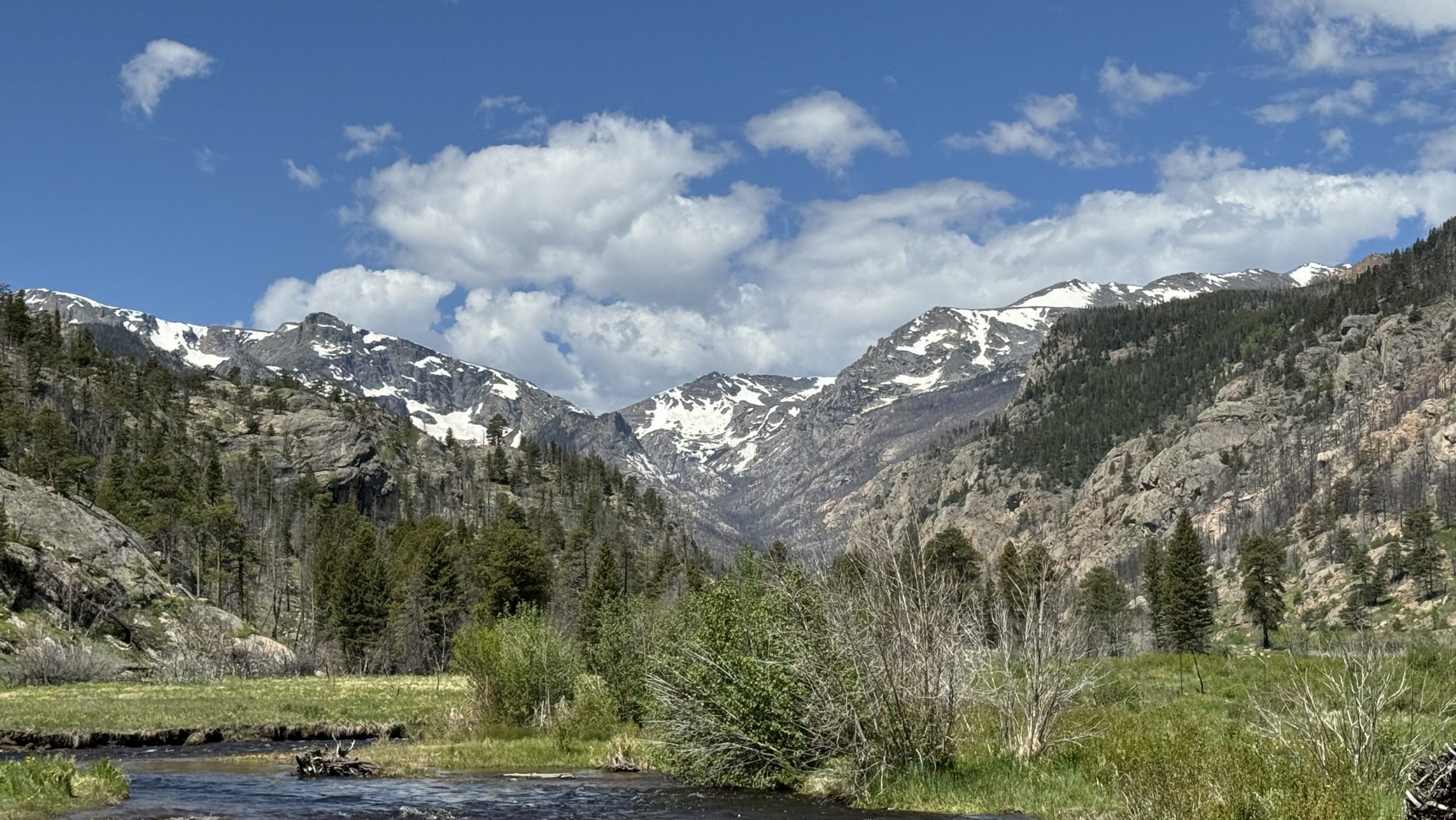
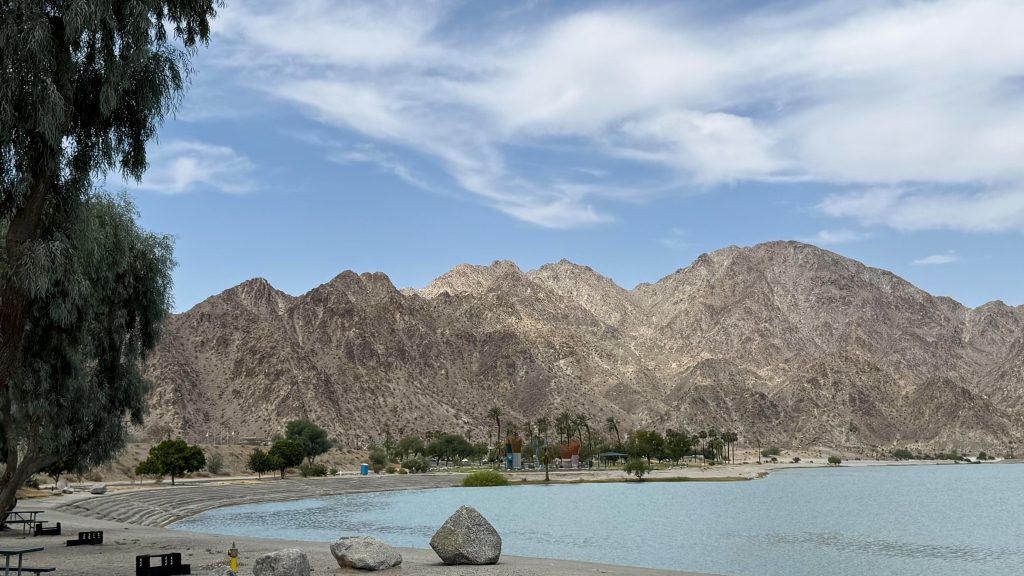
Joshua Tree National Park and the Salton Sea area were new to me. Harsh beauty that’s not my ideal, but interesting to explore. I camped at Lake Cahuilla, a cement-lined reservoir filled with water diverted from the Colorado River. The lake provides water for the Palm Springs area and local agriculture.
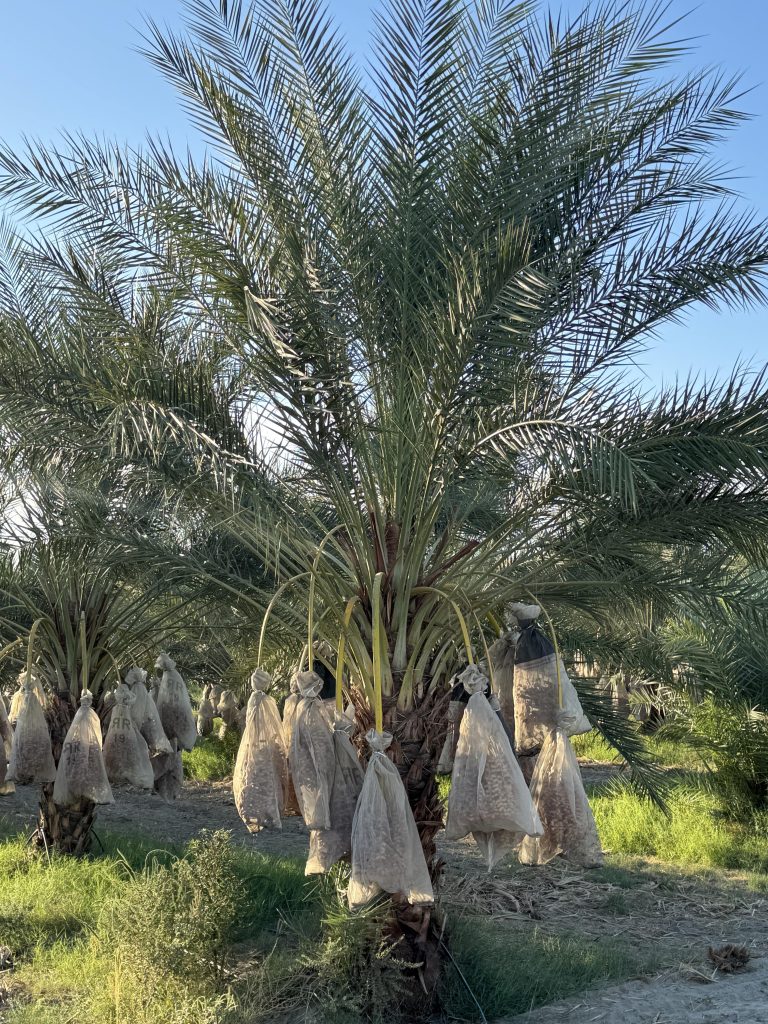
Native to the Middle East and South Asia, date palms are grown extensively throughout the area. California produces 40 million pounds of dates annually.
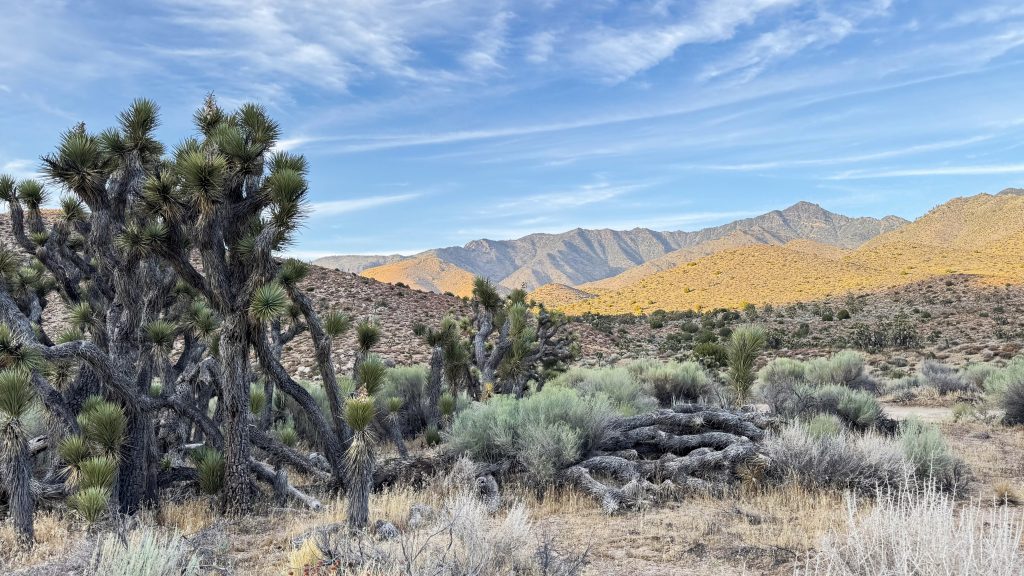
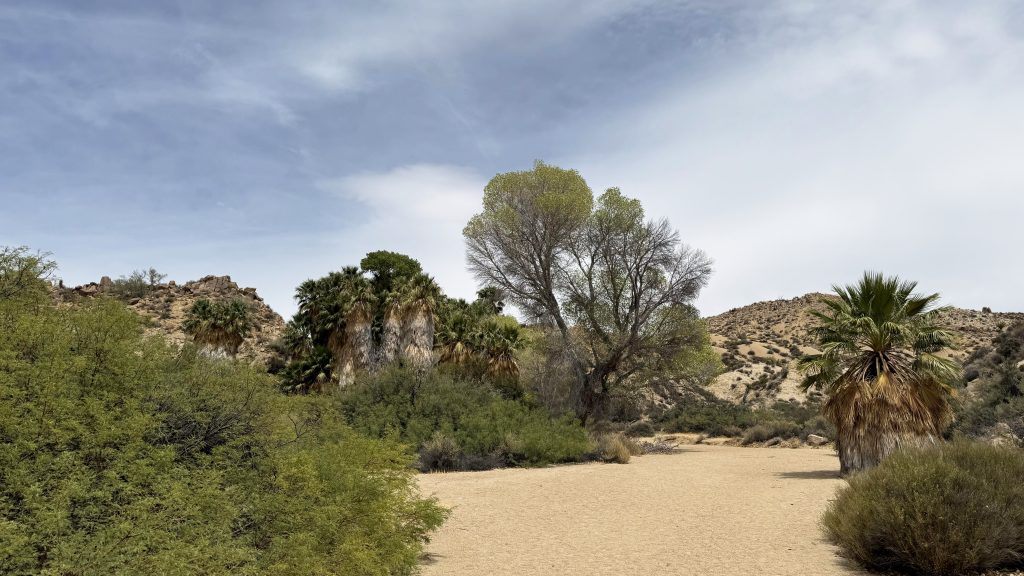
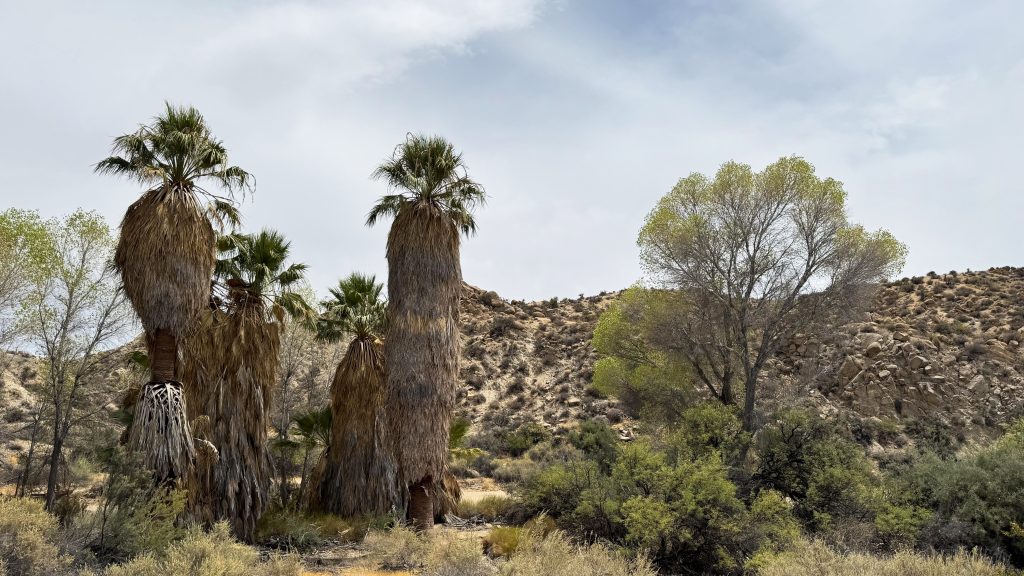
Joshua Tree National Park contains two desert ecosystems, the higher elevation Mojave Desert (above), and the lower elevation Colorado Desert (below).
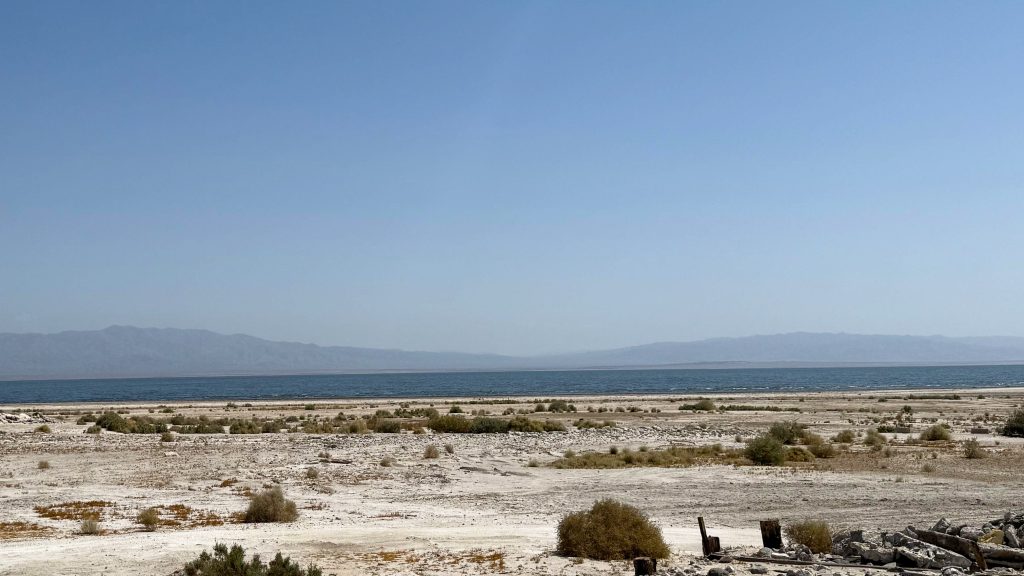
The Salton Sea sits 236 feet below sea level. Its water has a higher salinity than the Pacific Ocean, though not as high as Utah’s Great Salt Lake.
When the Colorado River changed course about 500 years ago, the lake dried completely. The modern lake was formed in 1905 when water from an irrigation canal fed by the Colorado River broke through a head gate and flooded the basin.
The lake is shrinking now as more water is diverted for agriculture.
Storms passing over the drying lake bed, or playa, stir up dust contaminated by agricultural runoff and send it into nearby communities.
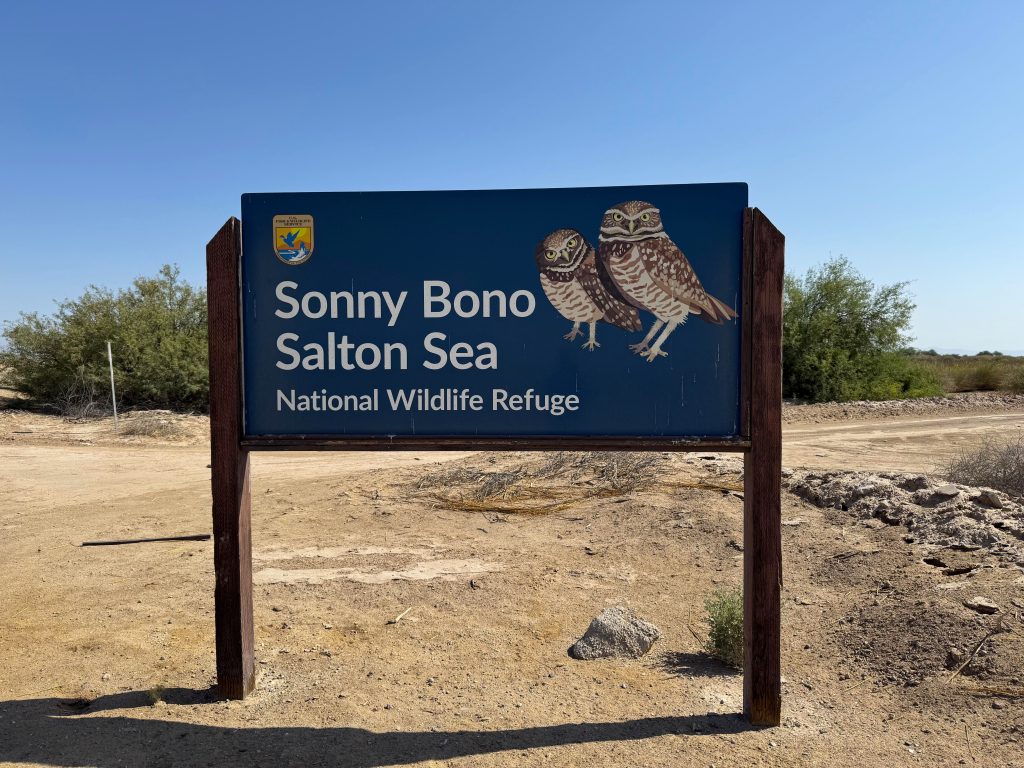
Over the last couple of decades, habitat restoration and dust suppression programs were started.
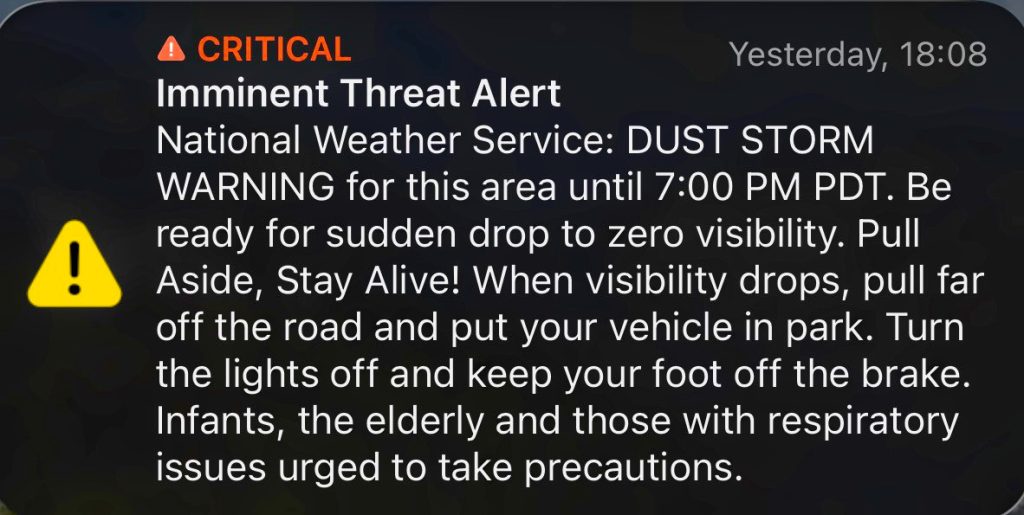
But while I was there a storm blew a massive dust cloud and I received this warning on my phone.
I was particularly surprised to learn that California’s produces 40 million pounds of dates annually. That’s a lot of dates – more than I can eat in a day!!!